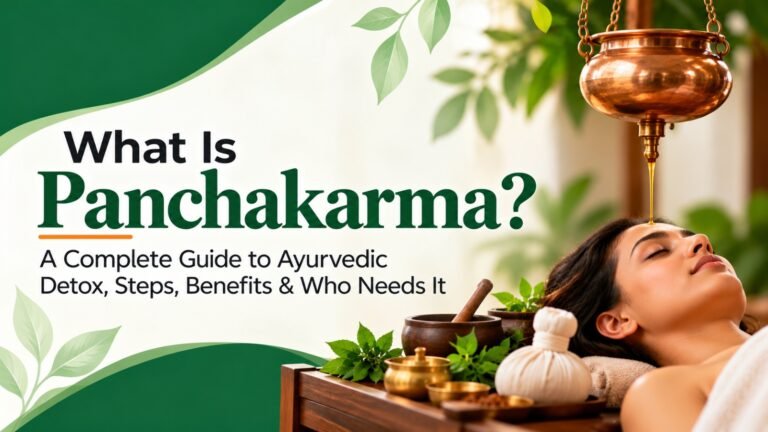
Ayurveda offers several traditional approaches to health and wellness, and Panchakarma is one of its most recognised therapeutic systems. It includes specialised procedures designed to address different health conditions through an individualised treatment approach.
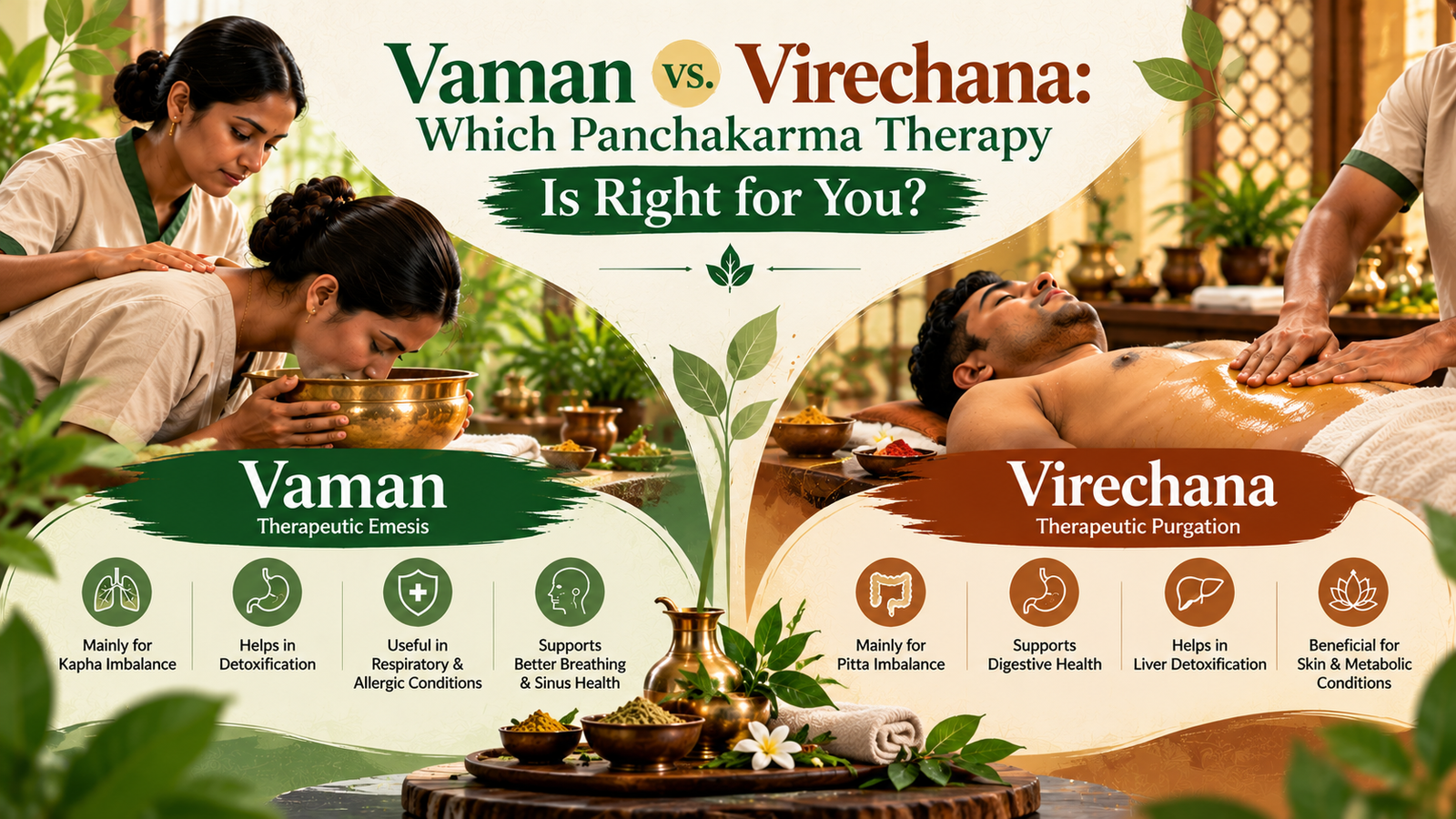
Among the five principal Panchakarma procedures, Vaman and Virechana are two important therapies traditionally used for therapeutic elimination. Although both are classified as Shodhana (purification) procedures in Ayurveda, they differ in their methods, traditional applications, and suitability.
Understanding the difference between Vaman and Virechana can help you have a more informed discussion with an Ayurvedic practitioner before considering treatment.
If you are exploring Panchakarma Therapy in Delhi, knowing how these procedures work, what preparation they involve, and what factors influence their selection can help you understand your treatment options.
This blog explores the differences between Vaman and Virechana and how an Ayurvedic practitioner determines which approach may be appropriate.
1. What Is Vaman Therapy in Ayurveda?
Vaman Karma is a traditional Panchakarma procedure involving medically supervised therapeutic emesis, or controlled vomiting, using prescribed preparations. According to classical Ayurvedic principles, Vaman is primarily associated with the management of aggravated Kapha Dosha.
It is selected based on an individual’s constitution, health condition, digestive capacity, and overall suitability. Unlike ordinary vomiting caused by illness, therapeutic Vaman is a planned clinical procedure performed under the supervision of a qualified Ayurvedic practitioner.
How Is Vaman Therapy Traditionally Performed?
The procedure generally involves three stages:
1. Purvakarma (Preparation)
Before the main procedure, the practitioner evaluates the individual’s health and prepares the body according to the treatment plan.
Preparatory measures may include:
- Deepana and Pachana to support digestive preparation.
- Snehana, involving prescribed internal or external oleation.
- Swedana, involving appropriate fomentation procedures.
- Dietary and lifestyle instructions.
2. Pradhanakarma (Main Procedure)
The main procedure involves administering specifically selected preparations under professional supervision to induce controlled therapeutic emesis.
The practitioner monitors the individual’s response throughout the procedure and evaluates whether the intended therapeutic process has been completed appropriately.
3. Paschatkarma (Post-Treatment Care)
After the procedure, the practitioner provides dietary and lifestyle instructions.
A graduated dietary regimen, traditionally known as Samsarjana Karma, may be recommended depending on the procedure and the individual’s condition.
Who May Be Considered for Vaman?
In classical Ayurveda, Vaman is traditionally associated with selected Kapha-dominant conditions. However, it is not suitable for everyone. A detailed clinical assessment is necessary before considering this procedure.
Pregnancy, significant physical weakness, certain cardiovascular conditions, dehydration, and other medical circumstances may make therapeutic emesis inappropriate or unsafe. It should never be attempted independently or through home remedies.
2. What Is Virechana Therapy in Ayurveda?
Virechana Karma is another important Panchakarma procedure that involves medically supervised therapeutic purgation. In this procedure, prescribed preparations are used to induce controlled bowel evacuation.
According to traditional Ayurvedic principles, Virechana is primarily associated with the management of aggravated Pitta Dosha. It is selected after evaluating the individual’s digestive strength, constitution, medical history, and the nature of the health concern.
Virechana is different from taking ordinary laxatives. It is a structured therapeutic procedure that involves preparation, supervised administration, monitoring, and post-treatment care.
How Is Virechana Therapy Traditionally Performed?
Virechana generally follows three stages.
1. Purvakarma (Preparation)
The preparation phase helps determine whether the individual is suitable for the procedure. Depending on the treatment plan, it may involve:
- Digestive preparation through prescribed measures.
- Internal or external oleation.
- Appropriate fomentation procedures.
- Dietary modifications.
- Assessment of the individual’s physical condition.
2. Pradhanakarma (Main Procedure)
During the main procedure, the practitioner administers selected medicines intended to produce controlled purgation.
The response is monitored carefully, including the frequency and nature of bowel movements and the individual’s general condition.
3. Paschatkarma (Post-Treatment Care)
After Virechana, dietary recommendations and lifestyle instructions are provided. A gradual return to the regular diet may be advised depending on the individual’s response and clinical assessment.
Who May Be Considered for Virechana?
Traditionally, Virechana is considered in selected conditions associated with aggravated Pitta Dosha. However, suitability depends on individual health factors. People with dehydration, severe weakness, certain intestinal or gastrointestinal conditions, or other significant medical concerns may not be suitable candidates.
A qualified practitioner must evaluate the risks and potential benefits before recommending the procedure.
3. Vaman vs. Virechana: Understanding the Key Differences
Although both procedures belong to Panchakarma, their methods and traditional therapeutic applications are different.
Here is a comparison to help you understand them.
| Comparison Factor | Vaman Therapy | Virechana Therapy |
| Main procedure | Therapeutic emesis | Therapeutic purgation |
| Primary route | Oral expulsion | Bowel evacuation |
| Traditional Dosha association | Kapha | Pitta |
| Main process | Controlled vomiting | Controlled bowel movements |
| Preparation | Purvakarma | Purvakarma |
| Post-treatment care | Dietary and lifestyle regulation | Dietary and lifestyle regulation |
| Professional supervision | Essential | Essential |
The main difference is the route through which the therapeutic elimination is performed. Vaman involves controlled expulsion through the mouth, whereas Virechana involves controlled elimination through the intestines.
Neither procedure is universally better than the other. Their selection depends on the individual’s assessment and the practitioner’s clinical judgement.
4. What Are the Traditional Benefits of Vaman Therapy?
Within Ayurvedic practice, Vaman is traditionally recommended for selected Kapha-dominant conditions. Its intended therapeutic role is understood through classical Ayurvedic concepts rather than being equivalent to a modern medical detoxification treatment.
Some of its traditional applications include:
- Selected Kapha-dominant respiratory conditions.
- Certain skin-related conditions described in classical Ayurveda.
- Specific digestive complaints associated with Kapha imbalance.
- Selected conditions where therapeutic elimination is considered appropriate.
It is important to understand that these are traditional Ayurvedic applications, not guarantees of clinical improvement. Modern scientific evidence establishing the effectiveness of Vaman for individual diseases remains limited.
5. What Are the Traditional Benefits of Virechana Therapy?
Virechana is traditionally associated with Pitta-related imbalances in Ayurveda. Its application is determined according to classical Ayurvedic assessment and the individual’s overall health.
Some traditional applications include:
- Selected Pitta-dominant skin conditions.
- Certain digestive complaints.
- Specific conditions associated with Pitta imbalance.
- Selected situations where therapeutic purgation is considered appropriate.
The procedure may form part of an individualised Panchakarma treatment plan. However, Virechana should not be considered a replacement for medically established treatment of liver disease, intestinal disorders, or other diagnosed conditions.
Its effectiveness and safety for specific diseases require appropriate clinical evaluation.
6. Can Everyone Undergo Vaman and Virechana?
No. Both procedures involve significant physiological effects and are not appropriate for every individual. Certain health conditions can increase the risks associated with therapeutic emesis or purgation.
For example:
Vaman considerations:
- Pregnancy.
- Significant physical weakness.
- Certain heart-related conditions.
- Dehydration.
- Certain gastrointestinal or respiratory conditions.
Virechana considerations:
- Pregnancy.
- Dehydration.
- Severe weakness.
- Acute gastrointestinal illness.
- Certain intestinal, kidney, or cardiovascular conditions.
These examples are not exhaustive lists of contraindications. Eligibility depends on the specific procedure, clinical circumstances, and professional assessment. People taking regular medication or managing chronic conditions should disclose their complete medical history before considering Panchakarma.
Neither procedure should be performed without appropriate clinical supervision, monitoring, and emergency preparedness.
9. Vaman or Virechana: Which Panchakarma Therapy Is Right for You?
There is no single answer that applies to everyone. The two therapies serve different traditional purposes within Ayurveda. Vaman may be considered when the practitioner identifies a suitable Kapha-related indication and determines that therapeutic emesis is appropriate.
Virechana may be considered when the practitioner identifies a suitable Pitta-related indication and determines that therapeutic purgation is appropriate.
The final decision should be based on:
- Individual Prakriti and Vikriti assessment.
- Medical history and current health status.
- Digestive capacity and physical strength.
- Potential contraindications.
- The intended treatment objectives.
- A professional assessment of risks and benefits.
If neither procedure is appropriate, the practitioner may suggest another approach. Remember that Panchakarma is not a universal detox solution, and neither procedure should replace necessary conventional medical treatment.
10. Choosing Panchakarma Treatment in Delhi
If you are considering Panchakarma Treatment in Delhi, choosing an appropriate Ayurvedic centre is an important part of the process. Look beyond treatment availability and evaluate the qualifications of the practitioners, clinical assessment procedures, hygiene standards, and patient safety arrangements.
Before selecting a centre, consider the following:
- Qualified Ayurvedic Practitioners: Ensure that the treatment is recommended and supervised by appropriately qualified professionals.
- Individual Assessment: The centre should evaluate your medical history and health requirements instead of recommending the same procedure to everyone.
- Hygiene and Safety: Check the cleanliness of treatment rooms, equipment, and other clinical facilities.
- Transparent Consultation: You should receive clear information about the procedure, possible risks, preparation, and post-treatment care.
- Follow-Up Support: Ask whether the centre provides appropriate monitoring and follow-up guidance.
At Tarunveda, individuals exploring Ayurvedic wellness and Panchakarma options can learn about available therapies and consult qualified practitioners to understand which approach may be suitable for their requirements.
Conclusion
Vaman and Virechana are two distinct therapeutic procedures within traditional Panchakarma practice. Although both involve medically supervised elimination, they differ in their methods and traditional Ayurvedic applications.
Vaman is primarily associated with Kapha-related imbalances, while Virechana is traditionally associated with Pitta-related imbalances. Neither procedure is automatically better than the other. The appropriate approach depends on individual health, medical history, physical strength, and professional assessment.
If you are exploring Panchakarma Therapy in Delhi, begin with a detailed consultation rather than selecting a procedure based on online information alone. Understanding the differences between Vaman and Virechana can help you make a more informed decision and have a meaningful discussion with a qualified Ayurvedic practitioner.