Knee pain can make everyday activities such as walking, climbing stairs, sitting, and standing uncomfortable. Whether it is associated with age-related joint changes, stiffness, physical strain, or reduced mobility, persistent knee discomfort can affect overall quality of life.
Ayurveda offers several traditional approaches to supporting joint comfort and mobility. One such therapy is Janu Basti, a specialised external Ayurvedic treatment in which warm medicated oil is retained over the knee joint for a specific period.
Often considered as part of traditional Ayurvedic care, Janu Basti is used to support joint relaxation and comfort. But how does the procedure work? What happens during a session, and who may consider it?
Let’s understand the therapy, its traditional benefits, procedure, and important precautions.
What Is Janu Basti?
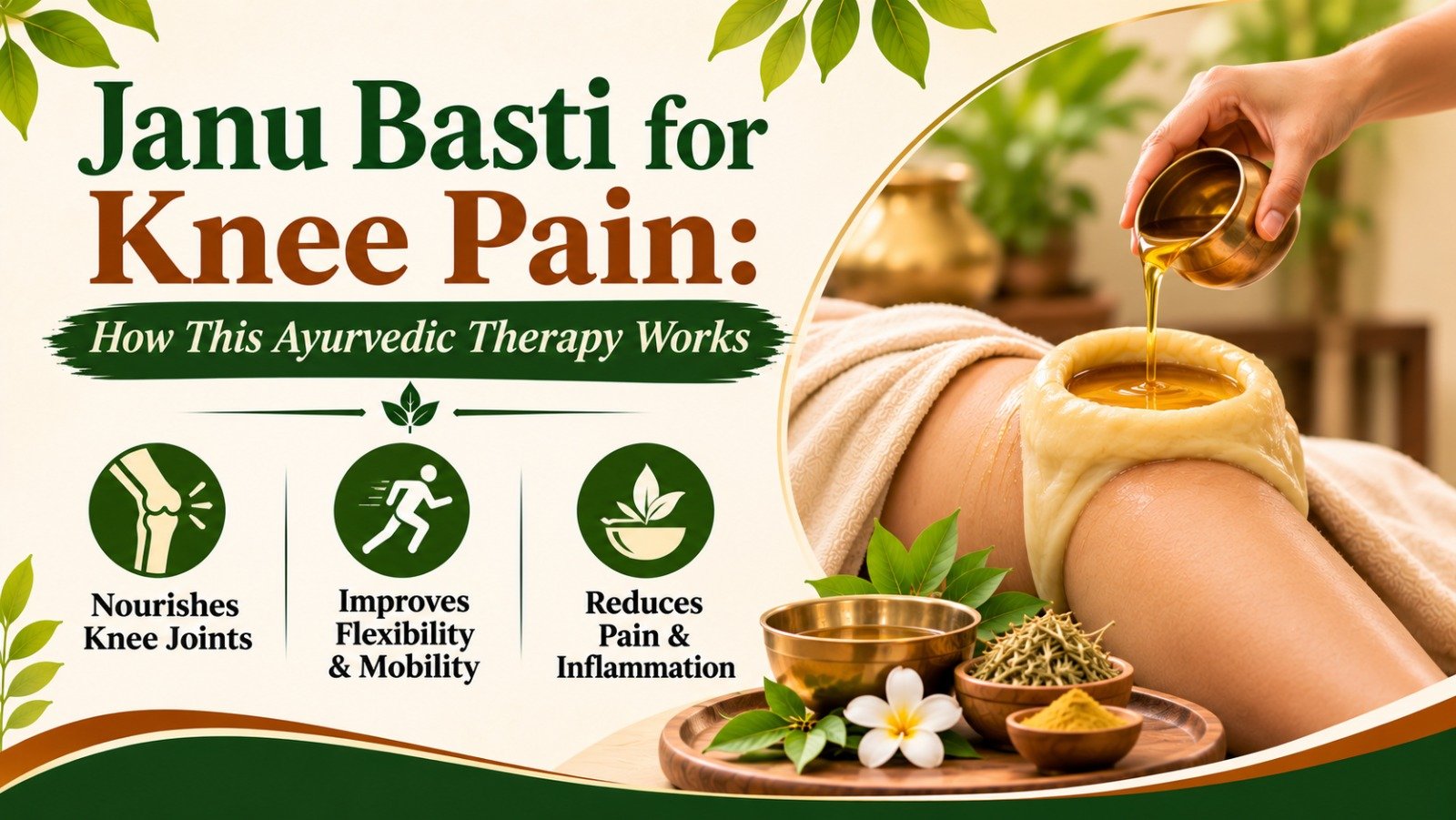
Janu Basti is a traditional Ayurvedic therapy in which warm oil is held over the knee joint using a specially prepared dough ring. The word Janu refers to the knee, while Basti refers to a method of retaining a substance within a specific area.
During the procedure, a ring made from herbal dough is placed around the knee. Warm medicated oil is gently poured into the enclosed space and retained for a prescribed duration.
The treatment is traditionally used in Ayurveda for people experiencing:
- Knee stiffness and discomfort.
- Joint tightness.
- Difficulty with comfortable knee movement.
- Age-related joint discomfort.
- Muscular tension around the knee.
- Discomfort associated with certain traditional Ayurvedic descriptions of joint disorders.
The choice of oil, treatment duration, and number of sessions may vary according to the individual’s condition and the practitioner’s assessment.
How Does Janu Basti Work?
Janu Basti is a localised external therapy that combines warmth with the application of medicated oil. The procedure focuses on the knee area rather than the entire body. In traditional Ayurvedic practice, it is used to provide local warmth and support relaxation around the joint.
Here is how the therapy is generally performed.
1. Preparation of the Knee Area
The practitioner first examines the knee and prepares the treatment area. The skin is checked for irritation, wounds, swelling, or other conditions that may make the procedure unsuitable. The patient is positioned comfortably, usually with the knee accessible and supported.
2. Creating the Dough Ring
A ring-shaped boundary is prepared using specially kneaded herbal dough. It is carefully placed around the knee to create a small enclosed area. The practitioner checks that the ring is sufficiently sealed to prevent oil from leaking.
3. Pouring Warm Medicated Oil
Warm Ayurvedic oil is gradually poured into the enclosed space. The oil temperature is carefully monitored to avoid discomfort or burns. The practitioner maintains a suitable temperature throughout the session.
4. Retaining the Oil
The oil remains around the knee for a prescribed period. During this stage, the patient rests comfortably while the practitioner monitors the temperature and the treatment area.
5. Removing the Oil and Cleaning the Area
Once the session is complete, the oil is removed and the dough ring is taken away. The knee is gently cleaned. Depending on the practitioner’s advice, the session may be followed by rest or other supportive Ayurvedic procedures.
Traditional Benefits of Janu Basti for Knee Pain
Janu Basti is traditionally used as part of Ayurvedic joint-care practices. Its potential benefits are generally associated with local warmth, oil application, and relaxation.
However, it is important to understand that high-quality clinical evidence establishing Janu Basti as an effective treatment for specific knee conditions remains limited. It should not be considered a proven cure for arthritis or other joint diseases.
Some traditionally described benefits include:
1. May Help Relieve Feelings of Knee Stiffness
Warm oil application may provide temporary comfort and relaxation around the treated area. People experiencing mild stiffness may find the warmth soothing, although individual experiences can differ.
2. Supports Local Relaxation
The gentle warmth and resting position during the procedure may help relax the surrounding soft tissues. This can contribute to a comfortable treatment experience for some individuals.
3. May Support a Relaxing Treatment Routine
Janu Basti is a localised therapy that allows patients to rest while the practitioner applies warm oil to the knee. For some people, this can be a relaxing addition to a broader wellness routine.
4. Complements Traditional Ayurvedic Joint Care
In Ayurveda, Janu Basti may be included in a broader care plan based on an individual’s symptoms and traditional assessment.
A qualified practitioner may recommend it alongside other supportive measures, but treatment should be tailored to the person’s medical condition.
5. Encourages Attention to Joint Health
The therapy can also provide an opportunity to discuss movement, physical activity, weight management, and other habits that influence knee health.
These lifestyle factors remain important for maintaining mobility and managing many causes of knee discomfort.
Which Knee Conditions May Require an Assessment Before Janu Basti?
Knee pain can have several causes. It is important to identify the underlying problem before selecting any treatment.
Some common conditions associated with knee discomfort include:
| Condition | Common Symptoms |
| Osteoarthritis | Pain, stiffness, and reduced joint movement |
| Rheumatoid arthritis | Joint pain, swelling, and prolonged morning stiffness |
| Muscle strain | Pain and tenderness following physical activity |
| Tendon-related problems | Pain around the knee during movement |
| Ligament injury | Pain, swelling, and sometimes instability |
| Bursitis | Localised swelling and tenderness around the joint |
Janu Basti should not replace medical evaluation for these conditions. A healthcare professional can determine whether imaging, medication, physiotherapy, or another treatment is necessary.
What Happens During a Janu Basti Session?
People considering the therapy often want to know what to expect during their first appointment.
A typical session may include the following stages:
- Initial consultation: The practitioner discusses symptoms, medical history, existing diagnoses, and previous treatments.
- Treatment preparation: The knee area is examined, and the patient is positioned comfortably.
- Oil application: A dough ring is placed around the knee, and suitably warm medicated oil is retained within it.
- Monitoring: The practitioner monitors the oil temperature and the patient’s comfort.
- Completion: The oil is removed, the treatment area is cleaned, and aftercare instructions are provided.
The total appointment duration varies depending on the treatment plan and the practitioner’s approach.
How Many Janu Basti Sessions Are Required?
There is no universally established number of Janu Basti sessions for knee pain.
The recommended frequency and duration may depend on:
- The person’s symptoms.
- The underlying cause of knee pain.
- Overall health and medical history.
- Skin sensitivity.
- Response to previous sessions.
- The practitioner’s assessment.
Some Ayurvedic practitioners may recommend a course of sessions, but the treatment plan should be individualised.
Patients should avoid assuming that more sessions automatically produce better results.
Who Should Avoid or Seek Medical Advice Before Janu Basti?
Although Janu Basti is an external therapy, it is not suitable for everyone.
A medical assessment is particularly important if someone has:
- Severe or sudden knee pain.
- Significant swelling or redness.
- Fever along with joint pain.
- An open wound, skin infection, or irritation around the knee.
- A recent fracture or serious knee injury.
- A suspected ligament or meniscus injury.
- Reduced sensation around the treatment area.
- A history of significant burns or skin sensitivity.
People with diabetes, circulation problems, or conditions affecting sensation should be especially careful with warm oil applications because they may not recognise excessive heat promptly.
A hot, red, swollen knee accompanied by fever requires prompt medical attention. A severely painful knee, inability to bear weight, or major injury should also be assessed urgently.
Janu Basti should not delay appropriate diagnosis or treatment.
Janu Basti Alongside Other Knee-Care Practices
Managing knee discomfort often requires a broader approach rather than relying on one therapy.
Depending on the underlying condition, a healthcare professional may recommend:
Physiotherapy
Appropriate strengthening and mobility exercises can help improve the function of muscles supporting the knee.
Weight Management
For people with excess body weight, appropriate weight management can reduce mechanical stress on weight-bearing joints.
Regular Physical Activity
Low-impact activities, such as walking on suitable surfaces, swimming, and stationary cycling, may help maintain mobility when appropriate for the individual’s condition.
Medical Treatment
Depending on the diagnosis, treatment may include prescribed medication, physiotherapy, injections, or surgical evaluation.
Supportive Ayurvedic Care
Some people explore traditional therapies such as Janu Basti as complementary wellness practices. These should be discussed with the treating healthcare professional, especially when the person is already receiving medical treatment.
Janu Basti Therapy in Delhi: Choosing the Right Ayurvedic Centre
If you are exploring Janu Basti Therapy in Delhi, choosing a qualified and responsible treatment provider is important.
Before scheduling an appointment, consider the following:
1. Practitioner Qualifications: Check the practitioner’s recognised qualifications and experience in Ayurvedic therapies.
2. Initial Assessment: A responsible centre should ask about your symptoms, medical history, and existing diagnosis before recommending treatment.
3. Hygiene Standards: Ensure that the treatment area, equipment, and materials are clean and properly maintained.
4. Oil Temperature Monitoring: The practitioner should carefully monitor the oil temperature throughout the procedure.
5. Individualised Treatment: The type of oil, duration, and treatment plan should be selected according to your needs.
6. Transparent Guidance: Avoid providers who promise guaranteed cures or advise you to stop prescribed medical treatment without consulting your doctor.
At Tarunveda, individuals exploring traditional Ayurvedic wellness approaches can enquire about suitable therapies and professional guidance. A consultation can help determine whether Janu Basti is appropriate for their individual requirements.
Conclusion
Janu Basti is a traditional Ayurvedic external therapy that involves retaining warm medicated oil around the knee using a specially prepared dough ring.
It is traditionally used to support local relaxation and comfort for people experiencing knee stiffness and discomfort. However, scientific evidence supporting its effectiveness for specific knee diseases remains limited.
If you are considering Janu Basti Therapy in Delhi, begin with an appropriate assessment, understand the possible benefits and limitations, and consult qualified healthcare professionals before starting treatment.
Taking care of knee health requires an informed approach that considers the underlying condition, suitable physical activity, professional guidance, and appropriate medical care.
Frequently Asked Questions (FAQs)
1. What is Janu Basti therapy used for?
Janu Basti is a traditional Ayurvedic external therapy used around the knee joint. It is traditionally associated with supporting local comfort and relaxation in people experiencing knee stiffness and discomfort.
2. Is Janu Basti beneficial for knee osteoarthritis?
Janu Basti is used by some Ayurvedic practitioners as a complementary therapy for people with joint discomfort. However, there is insufficient high-quality clinical evidence to establish it as an effective treatment for osteoarthritis. It should not replace evidence-based medical care.
3. How long does a Janu Basti session take?
The duration depends on the practitioner’s protocol and individual treatment plan. The consultation and preparation may also add to the total appointment time.
4. Is Janu Basti a painful procedure?
The procedure is generally designed to be comfortable and non-invasive. However, excessively hot oil can cause burns. The practitioner should monitor the temperature and stop if the patient experiences discomfort.
5. Can Janu Basti cure chronic knee pain?
There is no reliable clinical evidence that Janu Basti cures chronic knee pain or reverses joint damage. Persistent knee pain requires an assessment to identify its underlying cause.
6. How many sessions of Janu Basti are needed?
There is no standard number of sessions. The frequency and duration depend on individual symptoms, health status, and the practitioner’s assessment.
7. Can Janu Basti be combined with physiotherapy?
Some individuals may explore Janu Basti as a complementary therapy while receiving physiotherapy. However, the combination should be discussed with the treating healthcare professional to ensure that the overall treatment plan is appropriate.
8. Where can I enquire about Janu Basti Therapy in Delhi?
You can contact a qualified Ayurvedic centre in Delhi, such as Tarunveda, to enquire about the therapy, practitioner qualifications, consultation process, and suitability for your condition.