Introduction
Sinus congestion, recurring headaches, nasal blockage, and facial pressure can affect everyday comfort and make even simple activities difficult. Changes in weather, allergies, respiratory infections, and environmental irritants may contribute to these problems. While conventional treatments are commonly used to manage symptoms, many people also explore traditional Ayurvedic approaches to respiratory and nasal wellness.
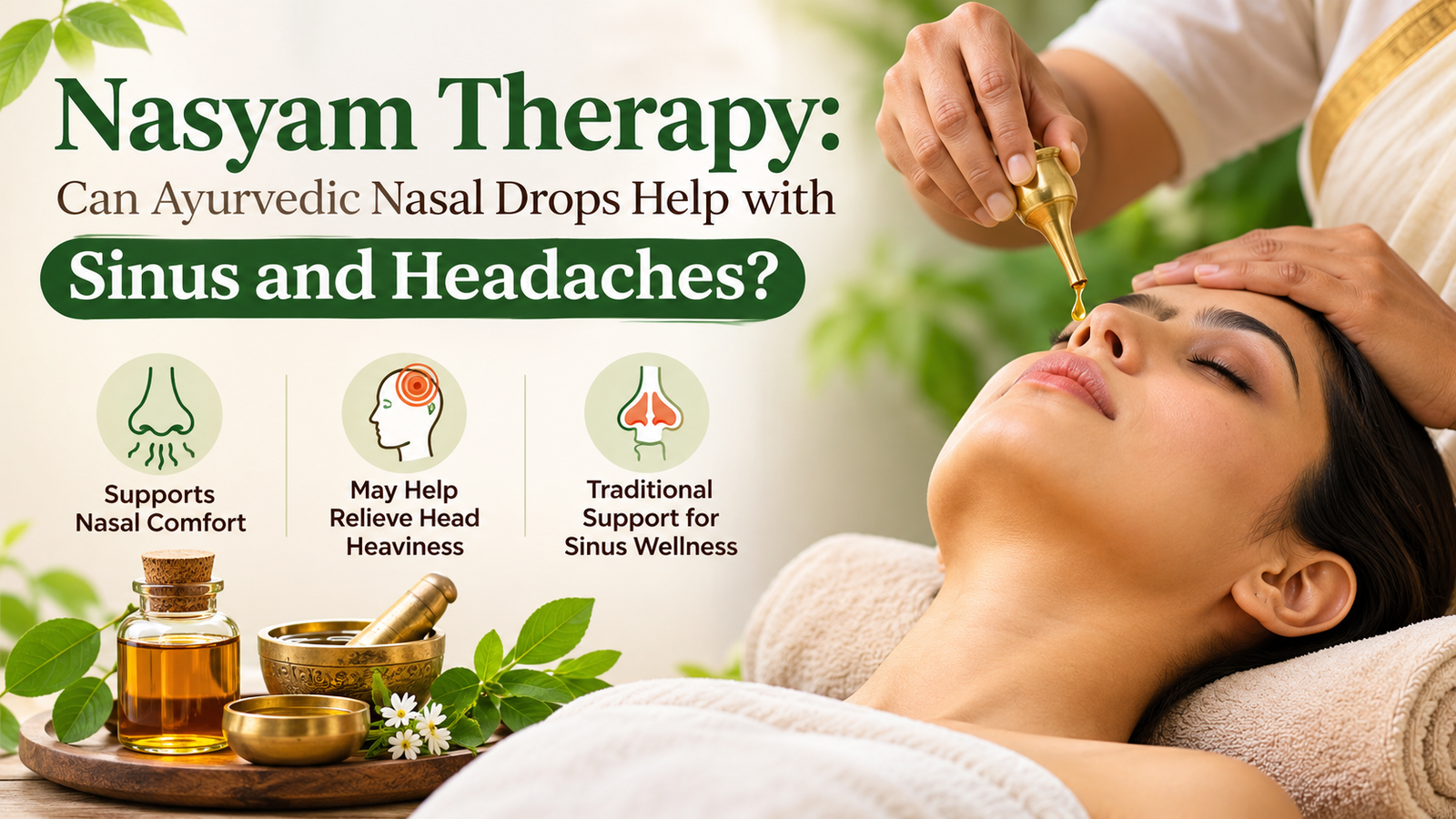
One such practice is Nasyam Therapy, a traditional Ayurvedic procedure that involves administering selected herbal oils or preparations through the nostrils. In Ayurveda, this therapy is traditionally associated with cleansing and nourishing the nasal passages and supporting the head and neck region.
But can Ayurvedic nasal drops actually help with sinus problems and headaches? What happens during the procedure, and who should consider it? Let’s explore the traditional principles, potential benefits, procedure, precautions, and limitations of Nasyam Therapy.
What Is Nasyam Therapy?
Nasyam, also known as Nasya Karma, is one of the traditional procedures included in Ayurvedic Panchakarma practices. It involves administering specially selected substances through the nasal passages under appropriate supervision.
Depending on the individual’s condition and the practitioner’s assessment, these preparations may include herbal oils, medicated ghee, herbal juices, or other traditional formulations.
In Ayurveda, the nose is considered an important route for therapies intended to address the head and neck region. Nasyam is traditionally used as part of approaches for concerns involving nasal congestion, heaviness around the head, and certain head and neck complaints.
It is important to understand that traditional Ayurvedic explanations are not the same as established medical evidence. The effectiveness of Nasyam for treating sinusitis, migraines, or other headaches has not been established through sufficient high-quality clinical research.
How Can Nasyam Therapy Help with Sinus and Headaches?
Nasyam Therapy is traditionally used to support nasal and head-region wellness. Its potential relevance to sinus discomfort and headaches can be understood through the following aspects.
1. Supports Nasal Comfort
Nasal congestion can make breathing uncomfortable, particularly during seasonal changes or when allergies are present. Certain Ayurvedic nasal preparations are traditionally used to support nasal comfort.
However, medicated oils should not be considered a proven substitute for saline nasal irrigation or medically recommended treatments for nasal congestion.
2. May Support Relief from Head Heaviness
Some people experience a feeling of heaviness around the forehead, eyebrows, and nose when dealing with nasal congestion.
Nasyam is traditionally used in Ayurveda for certain head-related complaints. However, there is not enough reliable clinical evidence to establish that nasal oil preparations directly relieve headaches.
3. Traditional Support for Nasal and Sinus Wellness
In Ayurvedic practice, Nasyam is associated with maintaining nasal health and addressing certain imbalances described in traditional Ayurvedic texts.
It may be considered as a complementary wellness practice after consulting a qualified healthcare professional. It should not replace appropriate treatment for bacterial sinus infections, chronic sinusitis, or other underlying medical conditions.
4. A Part of a Personalised Ayurvedic Wellness Approach
Ayurveda generally considers individual symptoms, constitution, lifestyle, and overall health before recommending therapies.
A qualified Ayurvedic practitioner may assess these factors before deciding whether Nasyam is appropriate or whether another approach would be more suitable.
What Happens During a Nasyam Therapy Session?
Nasyam Therapy is generally performed through a structured process. The exact procedure may vary depending on the Ayurvedic tradition, preparation used, and the individual’s health condition.
Step 1: Initial Consultation
Before starting the procedure, the practitioner evaluates the individual’s symptoms, medical history, nasal health, and overall condition. This helps determine whether Nasyam is suitable.
Step 2: Preparation
Depending on the prescribed method, the practitioner may use a gentle head or facial massage and controlled warming techniques to prepare the treatment area.
Step 3: Administration of Nasal Drops
The individual is positioned appropriately, and the selected Ayurvedic preparation is administered into the nostrils in a prescribed quantity.
The type of preparation and dosage depend on the practitioner’s assessment. Different formulations are used for different traditional therapeutic purposes.
Step 4: Post-Therapy Care
After administration, the practitioner may provide instructions regarding rest and post-treatment care. The individual should follow the prescribed guidance and report any irritation, breathing difficulty, or unusual discomfort.
Important: Nasyam should not be attempted independently using random herbal oils or homemade nasal preparations. The nasal passages are sensitive, and inappropriate products or administration may cause complications.
Different Types of Nasyam Therapy
Traditional Ayurveda describes several forms of Nasya based on the preparation and method of administration.
| Type | Traditional description |
| Marsha Nasya | Uses a comparatively larger prescribed quantity of medicated preparation. |
| Pratimarsha Nasya | Uses a smaller quantity of nasal preparation as described in Ayurvedic practice. |
| Navana Nasya | Uses medicated oils or herbal liquids according to the prescribed method. |
| Avapeeda Nasya | Traditionally involves administering expressed herbal juices. |
| Pradhamana Nasya | A specialised procedure involving herbal powders. |
Not every type is appropriate for every individual. Some procedures require particular expertise and should only be performed by appropriately trained practitioners.
Who May Consider Nasyam Therapy?
People exploring traditional Ayurvedic approaches may discuss Nasyam with a qualified practitioner if they experience:
- Recurrent nasal congestion.
- A feeling of heaviness around the forehead.
- Seasonal nasal discomfort.
- Dryness or irritation inside the nose.
- Certain head and neck complaints.
- Recurring sinus-related discomfort.
However, these symptoms can have different underlying causes. For example, recurring headaches may be related to migraines, tension headaches, eye strain, or other medical conditions rather than sinus problems.
A proper diagnosis is important before choosing any treatment.
Nasyam Therapy vs. Regular Nasal Drops
Although both approaches involve the nasal passages, Ayurvedic Nasyam and conventional nasal drops are not the same.
| Basis | Nasyam Therapy | Conventional Nasal Drops |
| Approach | Traditional Ayurvedic procedure | Modern medical treatment |
| Preparation | Selected Ayurvedic oils or formulations | Saline, corticosteroids, or decongestants |
| Purpose | Traditional nasal and head-region wellness | Treats specific nasal symptoms or conditions |
| Administration | Often practitioner-supervised | Depends on the prescribed product |
| Evidence | Limited clinical evidence for sinusitis | Varies by medicine, with established evidence for several treatments |
The appropriate option depends on the diagnosis and individual health requirements. Neither approach should be selected solely based on advertising claims.
Precautions and Safety Considerations
Although Nasyam is a traditional Ayurvedic procedure, it is important to approach it carefully.
Consider the following precautions:
- Consult a qualified practitioner: Get an individual assessment before undergoing the procedure.
- Avoid self-medication: Do not put unprescribed oils or herbal preparations inside your nose.
- Discuss existing conditions: Inform your practitioner about allergies, asthma, nasal polyps, recent nasal surgery, or ongoing infections.
- Use appropriate formulations: Ensure that preparations are properly identified and sourced.
- Stop if discomfort develops: Report irritation, coughing, breathing difficulties, or unusual symptoms immediately.
Oil-based nasal preparations also deserve particular caution because accidentally inhaled oil can enter the lungs and, rarely, cause lipoid pneumonia.
People with persistent sinus symptoms should consult an ENT specialist rather than relying exclusively on traditional therapies.
When Should You See a Doctor for Sinus Problems?
Not every headache or blocked nose is caused by sinusitis. Medical evaluation becomes especially important when symptoms persist, repeatedly return, or become more severe.
Seek medical attention if you experience:
- Nasal congestion lasting more than 10 days without improvement.
- Facial pain or pressure accompanied by persistent nasal discharge.
- Symptoms that improve initially but then become worse.
- Recurrent headaches that interfere with daily activities.
- High fever or severe facial pain.
Seek urgent medical care if you develop swelling around the eyes, vision changes, confusion, or an unusually severe headache.
Modern clinical guidelines recommend appropriate medical assessment and may include saline nasal irrigation, intranasal corticosteroids, or other treatments depending on the diagnosis.
How to Choose the Right Ayurvedic Centre in Delhi?
If you are considering Nasyam Therapy as part of an Ayurvedic wellness plan, choosing an appropriate healthcare facility is important.
Before selecting a centre, consider the following factors:
- Qualified practitioners: Check the qualifications and experience of the Ayurvedic doctors.
- Individual assessment: The centre should evaluate your symptoms and medical history before recommending treatment.
- Treatment transparency: Ask about the formulations, procedure, precautions, and expected outcomes.
- Hygiene standards: Ensure that treatment rooms and equipment follow appropriate hygiene practices.
- Integrated healthcare: A responsible centre should recognise when an ENT consultation or conventional medical treatment is necessary.
When exploring Ayurvedic Treatment in Delhi, prioritise professional guidance, transparent treatment information, and patient safety over promises of guaranteed results.
Frequently Asked Questions (FAQs)
1. What is Nasyam Therapy in Ayurveda?
Nasyam Therapy is a traditional Ayurvedic procedure that involves administering selected herbal oils, liquids, or other preparations through the nostrils. It is traditionally associated with nasal, head, and neck wellness.
2. Can Nasyam Therapy help with sinus problems?
Nasyam is traditionally used for certain nasal and sinus-related complaints. However, strong clinical evidence establishing its effectiveness for sinusitis is currently lacking. Consult a healthcare professional for an appropriate diagnosis.
3. Can Ayurvedic nasal drops relieve headaches?
Some Ayurvedic practices associate Nasyam with head-related complaints. However, there is insufficient evidence to establish that Ayurvedic nasal drops reliably relieve headaches or migraines.
4. Is Nasyam Therapy painful?
The procedure is generally intended to be performed comfortably under professional supervision. However, some individuals may experience temporary irritation or discomfort.
5. How many Nasyam Therapy sessions are required?
There is no universal number of sessions. The frequency and duration depend on the type of procedure, individual assessment, and the practitioner’s recommendations.
6. Can I perform Nasyam Therapy at home?
Clinical Nasyam procedures should not be attempted independently. Avoid using unprescribed oils or herbal preparations inside the nose.
7. Is Nasyam Therapy part of Panchakarma?
Yes. Nasyam is traditionally recognised as one of the five major procedures associated with Panchakarma in Ayurveda.
8. Is Nasyam suitable for everyone?
No. Suitability depends on individual health, symptoms, and medical history. Professional assessment is necessary before undergoing the procedure.
Conclusion
Nasyam Therapy is an established traditional Ayurvedic practice that focuses on administering selected preparations through the nasal passages. It is traditionally associated with nasal and head-region wellness and is sometimes explored by people experiencing congestion, facial heaviness, and sinus-related discomfort.
However, it is important to distinguish traditional applications from scientifically established medical benefits. Current research does not establish Nasyam as a proven treatment for sinusitis or headaches.
If you are considering this procedure, consult a qualified Ayurvedic practitioner and seek an appropriate medical diagnosis for persistent symptoms. A responsible, personalised approach can help you make informed decisions about your healthcare.